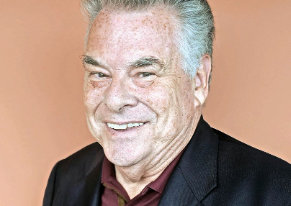
By Peter King
President Trump’s state visit to Great Britain and his meetings with foreign leaders at the United Nations General Assembly emphasized the continued significance of personal diplomacy in international affairs.
Trump’s royal welcome by King Charles III at Windsor Castle demonstrated the lasting relationship between the United States and Great Britain. (I say this as an Irish-American who severely criticized British policy in Ireland in the years before the signing of the historic Good Friday Agreement in 1998.) The reality is that beyond a common language, Americans and Brits share common values emanating from the Magna Carta. British leaders have demonstrated firmness and strength at key moments in our history.
Winston Churchill stood alone, defending Western civilization against Adolf Hitler and Nazi Germany in the dark early days of World War II, and then, in the postwar years, alerted the U.S. and the world to the growing menace of Joseph Stalin and the Soviet Union’s Iron Curtain.
Margaret Thatcher allied with President Ronald Reagan and Pope John Paul II to bring down the Soviet empire.
Tony Blair stood with President George W. Bush and America in the aftermath of 9/11. I observed Blair behind the scenes during the negotiations leading to the Good Friday Agreement, and was struck by his extraordinary courage and leadership. That British leadership continues today, as Britain provides weapons to Ukraine and deploys RAF fighter jets to Poland to help the nations resisting Russian aggression.
The state dinner Charles hosted for Trump was more than pomp and ceremony. It was a dramatic affirmation of the special relationship between our nations. This show of unity was particularly vital when totalitarian states — Russia, China and North Korea— threaten world security. In his remarks, Charles urged the U.S. and Great Britain to stand strong against Russian aggression in Ukraine, as we did against Hitler. (My wife, Rosemary, and I met then Prince Charles in Washington in 2011. He was very engaging and down to earth.)
The following day, Trump met with British Prime Minister Keir Starmer. Though Starmer is a member of the Labor Party and has a number of policy and ideological differences with Trump, the two are known to have a good working, friendly relationship. Their meeting certainly appeared to go well, with Starmer emphasizing the importance of the U.S. and Europe standing with Ukraine.
By all accounts, the president’s visit to Great Britain was a solid success.
The following week, he was in New York for the annual opening of the U.N. General Assembly. Trump was the first major leader to speak, and it was a classic Trump performance brought to the world stage. He began by mercilessly critiquing the U.N. for being consistently ineffective, exemplified that morning by the malfunctioning of an escalator and his teleprompter.
Not content to assail the organization itself, Trump verbally attacked countries individually and continents collectively. He was particularly critical of Russia and its dictator, Vladimir Putin, for its continued attacks on Ukraine, especially its innocent civilians. Significantly, one country that was spared Trump’s caustic criticism was Ukraine (in stark contrast with Trump’s White House encounter earlier this year with Ukrainian President Volodymyr Zelensky, whom he criticized for continuing to wage what Trump thought was a futile battle against Russia, because Ukraine had “no cards” left to play and would have to make territorial concessions to Putin).
Just hours after his General Assembly speech — which went three times longer than his allotted time — Trump met with Zelensky, and went beyond just criticizing Russia and Putin. He made a full reversal. Informed by a key adviser, Gen. Keith Kellogg, how weak Russia was after having suffered more than a million casualties, taken control of only 1 percent of Ukraine and with its economy in shambles, Trump hailed Ukraine’s courage and fighting ability. With allied support, he said, Ukraine could win the war and regain its lost territory, and that NATO countries should shoot down Russian planes that violate their air space.
I have supported Ukraine from the start, not just because its position is just, but because it’s in America’s national interest for Russia’s aggression to be stopped.
British Prime Minister Neville Chamberlain’s failure to stop Hitler at Munich because it was a “faraway” war led to World War II and millions of deaths, including more than 400,000 Americans. I believe that Trump’s visit with our closest ally was a reminder of the necessity to follow Churchill’s example, stand with Europe against Russian imperialism and not let the tragic failures of appeasement and isolationism be repeated.
Peter King is a former congressman, and a former chair of the House Committee on Homeland Security. Comments? pking@ liherald.com.