
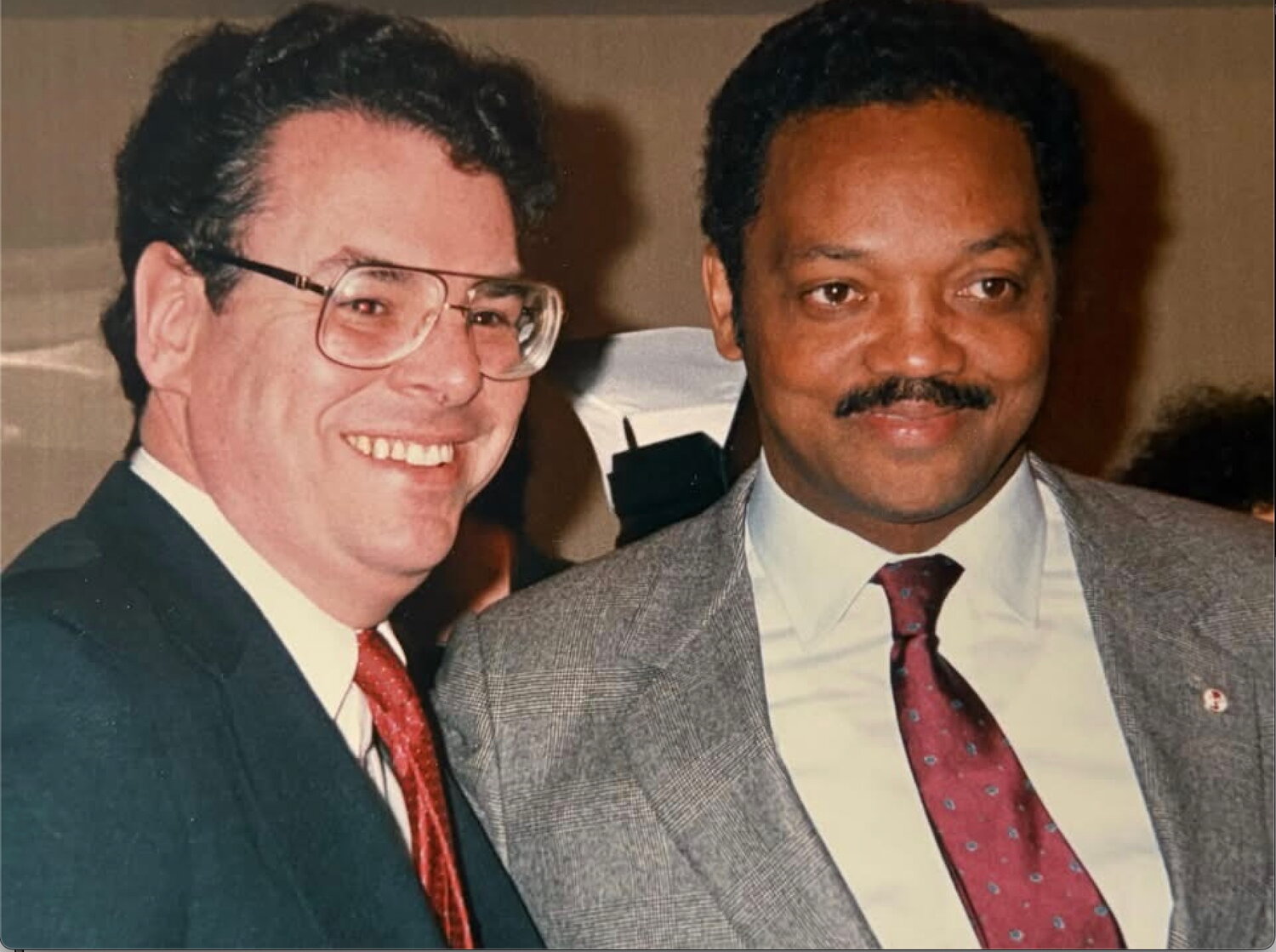
Several Long Island officials paid tribute to the Rev. Jesse Jackson, the longtime civil rights leader whose advocacy for a broad coalition of poor and marginalized Americans shaped national politics for decades after the Rev. Martin Luther King Jr.’s death.
Jackson’s death was confirmed by his family in a written statement last Tuesday. They wrote that the 84-year-old “died peacefully,” but did not list a specific cause of death.
“His unwavering commitment to justice, equality, and human rights helped shape a global movement for freedom and dignity,” the Feb. 17 statement read. “He elevated the voices of the voiceless — from his presidential campaigns in the 1980s to mobilizing millions to register to vote — leaving an indelible mark on history.”
U.S. Rep. Laura Gillen described Jackson as one of the most consequential civil rights leaders in the nation’s history, adding that he dedicated his life to working toward a more free and just society.
“His legacy fighting for the fundamental rights of Black Americans and to ‘Keep Hope Alive’ will never be lost,” Gillen wrote.
Peter King, who represented South Shore communities such as Wantagh and Seaford in Congress from 1993 to 2021, praised Jackson as a force of nature and a good man.
“Despite our political differences I had the opportunity to meet with Rev. Jackson a number of times,” King, a Seaford resident, wrote in a Feb. 17 Facebook post. “I always found him friendly, extremely intelligent and focused.”
Gov. Kathy Hochul described Jackson’s life as defined by courage and conviction.
“From Selma to the national stage, he stood tall against injustice,” Hochul wrote in a statement. “We honor his legacy and the generations he inspired.”
State Sen. Steve Rhoads, who represents Wantagh and Seaford, and the Town of Hempstead — which encompasses the two communities — declined to comment on Jackson’s death.
Jackson’s work brought him to Long Island where he visited Nassau and Suffolk counties during his first run for president in 1984, including a campaign stop at Hofstra University that April. Four years later, he returned to Nassau County for a senior citizens forum at Adelphi University alongside Massachusetts Gov. Michael Dukakis and then-Sen. Al Gore of Tennessee.
Jackson returned to Long Island following a mass shooting on the Long Island Rail Road in December 1993 that left six people dead and 21 injured. He said he was there to soothe racial tensions after reports indicated the shooter, Colin Ferguson, harbored animosity toward white people.
When the first presidential debate between Hillary Clinton and Donald Trump came to Hofstra in 2016, Jackson was there, throwing his support behind Clinton in her campaign.
Jackson, a protégé of King, led a lifetime of activism in the United States and abroad, advocating for the poor and underrepresented on issues including voting rights, job opportunities, education and health care.
Through his Rainbow/PUSH Coalition, he pressed corporate leaders to open boardrooms to more diverse voices, while also engaging in diplomatic efforts abroad.
Jackson was viewed as one of the most successful Black politicians of his generation. He was also a polarizing figure at times, drawing both admiration and criticism for his outspokenness and ambition.
Born in Greenville, South Carolina on Oct. 8, 1941, he died in Chicago, surrounded by family.
Several current and former elected officials across the political spectrum — including President Donald Trump, former President Barack Obama and United Nations Secretary-General Antonio Guterres — honored Jackson’s leadership and accomplishments.
“His unwavering belief in justice, equality, and love uplifted millions,” Jackson’s family statement concluded, calling to “honor his memory by continuing the fight for the values he lived by.”


