
Some of my most enduring memories involve libraries. Attending “Story Hour” at the local library with my mother as a child. Working my way through college staffing the Circulation desk and re-shelving books. Viewing the special exhibits at Oxford University’s Bodleian Library while serving as a visiting scholar after retiring from Adelphi. Writing my book on university governance while serving as an Allen Room Scholar at the New York Public Library. Showing the Gutenberg Bible to a grandson while visiting the Morgan Library.
Libraries are precious homes for books and other materials that preserve and interpret the past, stir curiosity and the imagination, and nurture future generations. They are celebrated worldwide on International Literacy Day, Sept. 8.
Andrew Carnegie recognized the importance of libraries over a century ago, when he began supporting free public libraries as places of congregation and education. Carnegie believed that access to information and knowledge would help those from limited household circumstances advance in careers and civic engagement. That certainly was the case for me.
The heart of a library is the librarian. Librarians are licensed professionals with graduate degrees. They are experts in collecting sources of information and ensuring that valid and valuable knowledge is available. They monitor access to age-appropriate materials and make decisions based on evidence, not emotion.
Librarians build collections according to mission and library type. They not only promote literacy, foster education and encourage critical thinking, but also offer free access to technology. They support teachers and effective teaching. Businesspeople and professionals as well as students use libraries, and seek the help of librarians, for research assignments of all kinds.
But these temples to truth are being threatened by initiatives to ban books and dismantle the federal Institute of Museum and Library Services. PEN America, a nonprofit literary and free-expression advocacy group, found 10,046 instances of book bans in the 2023-24 school year. It noted book bans in 29 states and 220 public school districts, including on Long Island. Most of the targeted books focus on sexual identity and racism, including slavery.
The lone Supreme Court ruling against book bans, from Long Island, no less, was Board of Education, Island Trees Union Free School District No. 26 v. Pico, in 1982. Some think it could be overturned by a new case from Texas focusing on the removal of 17 books deemed “obscene” and “pornographic,” including Maurice Sendak’s childhood classic, “Where the Wild Things Are.”
Banning books denies freedom of speech. In the past, such efforts were isolated and local. Now these campaigns are national, and simply compile lists of books to be banned whose subjects or authors — especially Black authors — are deemed questionable without any evidence. In years past, books such as Walt Whitman’s “Leaves of Grass” and Mark Twain’s “Huckleberry Finn” were banned, until successful lawsuits returned them to library shelves.
On Long Island, there are 120 public libraries and 125 public school districts with 656 schools. Public libraries are governed by boards of trustees and funded by fundraising, tax revenue and government grants. They are essential to high-quality schooling and are vital community resources, especially in rural and low-income regions.
According to one national report, “the American library . . . is a barometer of where we currently stand as a society when it comes to access to knowledge and information.” Libraries host listings of employment opportunities, provide health care bulletins, are sources of election information, make textbooks available for free, lend audio books for the hearing-impaired, offer citizenship classes, and open their rooms for community gatherings.
It seems that increasing numbers of people question the expertise of librarians, just as they question the expertise of doctors and scientists. None of these professions is infallible, of course. What sets them apart is that they are honor-bound by professional codes of ethics, and change their conclusions when new evidence is uncovered. For the librarian, this means curating as well as collecting and storing sources of information, whether on discs, in the cloud or in books.
The Swedish designer Josef Frank said, “The world is a book, and the person who stays at home reads only one page.” The librarian is our travel guide to new vistas through books, and libraries are our vehicles. We should treat them with care.
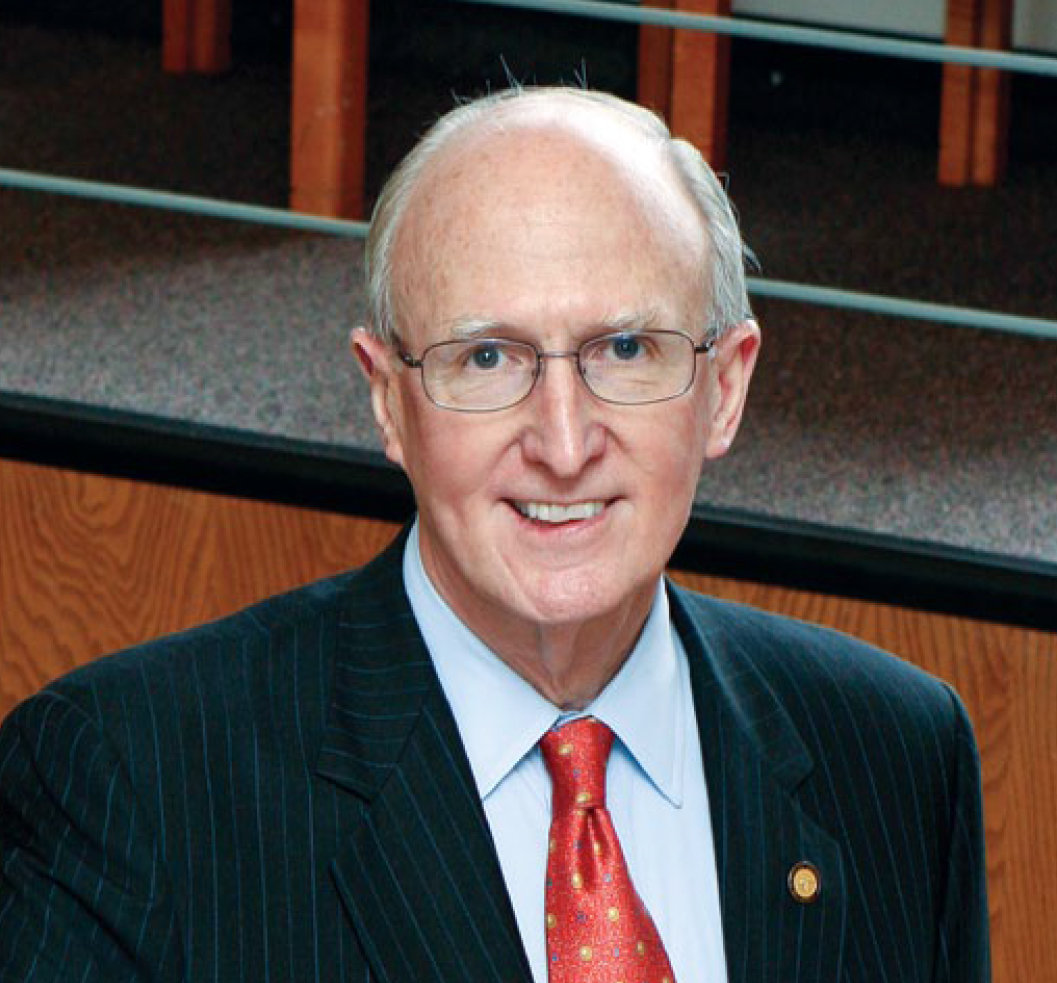
Robert Scott is president emeritus of Adelphi University and co-author, with Drew Bogner, of “Letters to Students: What it Means to be a College Graduate.”


