
Thursday, October 1, 2026
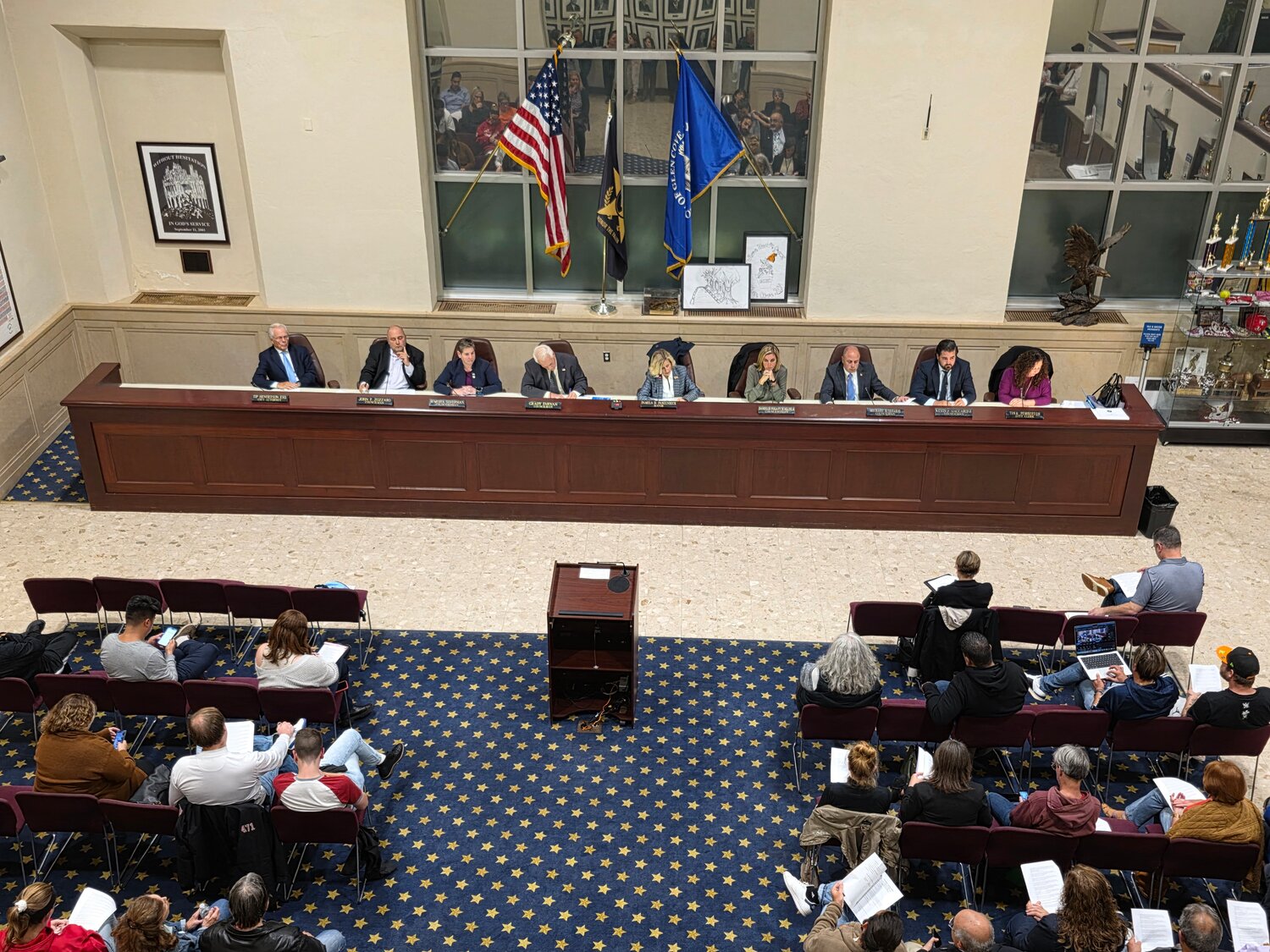
At Tuesday night’s City Council meeting, Mayor Pamela Panzenbeck presented her proposed $69.3 million 2026 budget — her fourth since she took office — highlighting what she called a string of financial successes that have restored fiscal stability to the city. But the meeting grew tense when the council’s Republican majority voted to close the public hearing on the spending plan after a single session, an unprecedented move that prompted objections from Democratic council members and residents who pointed out that the move curtailed public participation. Panzenbeck, who is seeking re-election next month, opened her presentation by reflecting on what she described as a historic financial turnaround. She credited City Controller Mike Piccirillo for helping to eliminate Glen Cove’s general fund deficit, which stood at $5.3 million in 2020. “As a result of these surpluses, I’m extremely happy to report that Glen Cove has finally eliminated its general fund deficit, and we now have a surplus,” Panzenbeck said, noting that the positive balance of $87,556, though modest, is a significant milestone. “The New York state comptroller’s office has once again designated the City of Glen Cove as having no fiscal stress,” Panzenbeck said. The proposed 2026 budget is nearly $3.9 million, or 5.96 percent, larger than the current spending plan. Panzenbeck said the increase is largely the result of rising personnel costs and contractual obligations. Among the key cost drivers, she listed $663,000 in full-time employee salary increases, $506,000 in pension contributions, $350,000 in severance payments to retirees, $275,000 in employee health care premiums and $186,000 in hourly wages for part-time employees. She said the budget includes no increase in residential property taxes and features a 4.05 percent tax rate decrease for commercial properties. However, the budget is balanced by the City’s move to start collecting a 1.5 percent sale tax that the county historically collected on the city’s behalf and turned over to the City in a form of a property tax rebate to residents. The budget’s success hinges on the City collecting more than $3 million in New York State sales tax payments, which the Mayor admitted is an estimate and higher than any amount the county has rebated in the past. Councilman Grady Farnan praised the proposal, calling it a “solid” budget and moved to close the public hearing. Councilman Mike Ktistakis seconded the motion. Panzenbeck also voted to close the hearing along with Councilman John Maccarone, while Councilmembers Marsha Silverman, Danielle Fugazy Scagliola, and John Zozzaro voted against the motion to cut off the public comment period. The vote immediately drew objections from the minority members. Fugazy Scagliola said she could not recall a time when the public hearing on the budget was closed after one meeting. “I’m always an advocate of giving the public an opportunity to speak,” she said. “What if somebody was anticipating that they had the next meeting to comment or ask question and now that opportunity is gone? I just don’t think that that’s prudent behavior.” During last week’s pre-council meeting, Panzenbeck told council members they had two weeks to review the spending plan. Silverman, a council member since 2017, echoed Fugazy Scagliola’s concerns, and said the majority’s move deprived residents of the chance to engage in one of the most important city processes of the year. “We should never cut off public conversation about anything, especially something that is as important as the budget,” Silverman said. “I asked last week for the run rates for 2025 so we could see where you think we will end the year. I still have not gotten that.” Additionally, Silverman said she had proposed exploring a city tax rebate program to offset the elimination of the county property tax rebate, an issue she said could affect the budget if further reviewed. Budgets have been known to change in the past. For example, in 2022, during Panzenbeck’s first year in office, the proposed budget was revised between the two public hearings held in October, increasing from $63.1 million to $63.3 million. This year, the public will not have that opportunity to comment — a decision that has left questions about transparency and public engagement lingering. Zozzaro called the process a farce. “We’re pulling the wool over the eyes of our residents,” he said. “There’s 28,000 people that live in this city. Maybe 1 percent have seen this budget.” Residents, some of whom said they don’t typically attend meetings, also voiced concerns. Philippe Voegtlen commended the administration for recent surpluses, but said that closing the hearing early undermined the city’s commitment to transparency. “You’re doing the exact opposite of fiscal responsibility by cutting off the access to public knowledge,” he said. Resident Daniel Oliva agreed, saying he hadn’t expected the budget to come up for a vote on Tuesday. “It seems kind of premature,” he said. “I don’t see what the harm is in allowing the public to digest that information just a little longer.” Despite the objections, the council voted on the budget, and the count was 3–3. City Attorney Tip Henderson explained the consequence of the deadlock: “The charter allows that in the event the budget does not pass, it is automatically adopted. This council did not pass the budget.” Later, asked if the council could take the spending plan up again to allow more review, Henderson said, “It’s up to the council,” and added that it would be possible “if the mayor put up the same budget again.” Fugazy Scagliola abstained saying she hadn’t been given enough time to review the details. “Just because you can do something doesn’t mean you should,” she said. “Closing out the budget and not letting people have their say, and not letting the council people have their time to thoroughly review the budget, is just not good practice.” Panzenbeck defended her decision. “I didn’t expect all the backlash about voting on the budget tonight,” she said. “It’s a zero percent tax increase.” Fugazy Scagliola reminded Panzenbeck that the issue wasn’t the tax increase, but transparency. Zozzaro responded that waiting two weeks would not have changed the tax rate. “It’s a zero percent tax increase today,” he said. “In two weeks, will it still be a zero percent tax increase?”


