
Thursday, October 1, 2026
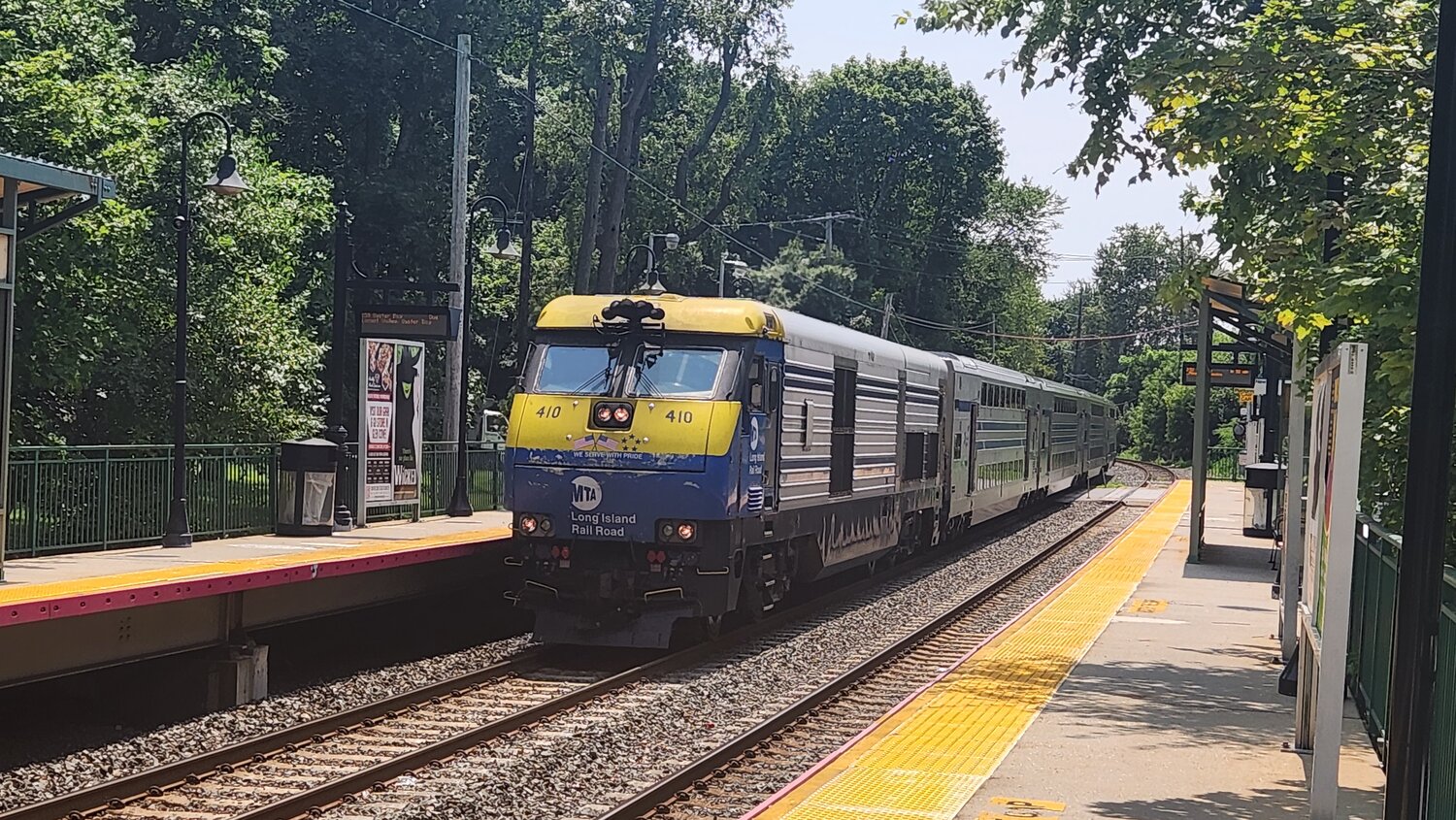
The Long Island Rail Road shut down service early Saturday after five railroad unions went on strike following the expiration of a federally mandated cooling-off period.
The strike affects unions representing signalmen, electricians, clerks, machinists and locomotive engineers, impacting thousands of workers and disrupting travel for nearly 300,000 daily riders.
For Glen Cove resident Shenel Etherige, the strike threatens to complicate not only her commute, but her family’s daily routine. Etherige, who works for the New York City Department of Design and Construction, commutes four days a week from the Glen Street station into the city, typically boarding the 7:16 a.m. train and returning home on the 3:57 p.m. train. She said city employees were still waiting for guidance on whether workers affected by the strike would be permitted to work remotely.
“We are literally up in the air waiting right now,” Etherige said.
Etherige said driving into the city would significantly increase her commute time and create challenges for picking up her 9-year-old daughter from her after-school program at Landing School before its 6 p.m. closing time. Her husband works a different schedule and is not usually able to help with pickups.
“It would literally be me racing against the clock trying to make sure that I’m here before her let-out time,” she said.
Etherige said she may have to leave work earlier than usual if the strike continues, which could force her to finish work later from home after commuting back to Glen Cove.
“I would have to leave my office even earlier,” she said. “Definitely at least by 3 p.m., which then impacts me not getting all of my work done for the day.”
She added that she does not view taking a shuttle bus as a realistic option and expects road congestion to worsen if more commuters begin driving into the city.
“The reason why I don’t drive into Long Island City anyway is because it can be an hour and a half to an hour and 40 minutes in the morning, and in the afternoon, it’s at least two hours to get home,” Etherige said. “So I already know that traffic is going to be amplified in the event there is a strike.”
Despite the disruption, Etherige said she supports railroad workers seeking higher pay.
“The cost of everything is going up, so why shouldn’t they have a salary and a pay that reflects that?” she said.
The strike has also revived discussion surrounding Glen Cove’s ferry terminal. On Tuesday night, the Glen Cove City Council approved two resolutions allowing New York Water Taxi to use the Glen Cove Ferry Terminal on weekdays to transport NYU Langone Health employees to and from New York City in the event of a rail shutdown.
“This is something that may happen; it may not happen,” Pamela Panzenbeck said during the meeting. “It depends upon the railroad strike. We’re trying to help Langone as much as we can.”
The Glen Cove terminal was built using $16.6 million in federal grant funding that required the city to operate ferry service for at least two years. Commuter ferry service briefly operated during the LIRR’s “Summer of Hell” in 2017, when major track repairs disrupted rail service, but long-term commuter plans stalled during the COVID-19 pandemic as more workers shifted to remote schedules.
Negotiations continued through the week up to the deadline, but the two sides were unable to reach an agreement on wages and contract terms.
The last Long Island Rail Road strike occurred on June 17, 1994, lasting for two days before a contract settlement was reached. Another strike was narrowly avoided in 2014.
The contract dispute centered largely on wage increases and the structure of compensation. A Presidential Emergency Board recommended a 4.5 percent wage increase for a one-year contract extension, while the MTA proposed a 3 percent across-the-board raise supplemented by lump-sum payments. Union leaders argued the lump sums would not permanently increase workers’ base salaries and continued pushing for higher recurring wage increases.
In response to the shutdown, the MTA activated its contingency plan, which includes limited weekday shuttle bus service for essential workers and commuters unable to work remotely.
Shuttle buses are operating during peak commuting hours between six Long Island locations — Bay Shore, Hempstead Lake State Park near the Lakeview train station, Hicksville, Huntington, Mineola and Ronkonkoma — and subway connection points in Queens, including the Howard Beach-JFK Airport A train station and the Jamaica-179 Street F train station.
The MTA also encouraged commuters to work remotely if possible and warned travelers to expect significant congestion and delays on roads and transit systems throughout the region.
Roslyn resident Eric Hirshberger, an engineer who regularly uses stations along the Oyster Bay line, including Glen Head, said he expects many commuters to attempt driving partway into the city and parking near subway stations.
“My hope is to find a place near a subway station that I can park, so I don't have to drive all the way into the city,” Hirshberger said. “But I'm afraid everybody else is having the same idea.”
Hirshberger said he can only work remotely two to three days a week. He added that driving would add significant time to his commute, especially on the way home, because of traffic.
“I try to get home early,” Hirshberger said, “to spend time with my kids before they go to sleep.”
Nassau County riders were urged to consider NICE Bus service as an alternative connection to subway stations in Queens.
This story will be updated as needed.
Additional reporting by Julia Capitelli


