
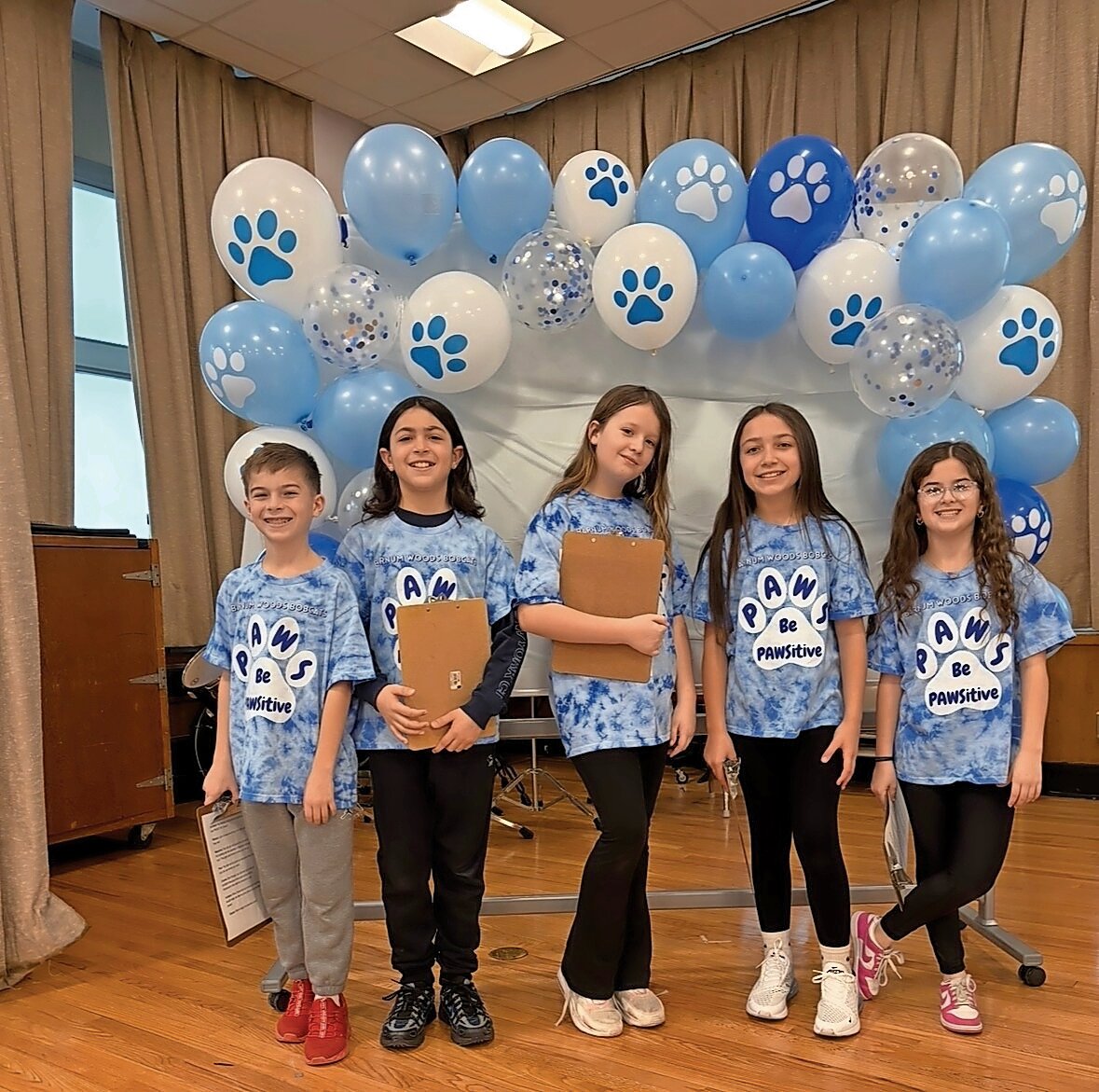


Some parents with children attending Barnum Woods Elementary School have received a note from the school regarding their child’s behavior since January — not because the student is in trouble, but to celebrate their acts of kindness.
Barnum Woods has strongly resonated with the district’s new programs suggested by the Character Education Committee. The goal of the committee is to find new ways to help impart good life lessons to students throughout their education.
At Barnum Woods, these efforts are spearheaded by first grade teacher Jennifer Lasher, who takes the district’s ideas and applies them in class with the help of fellow teachers.
“The committee decided on the six pillars of character: trustworthiness, respect, responsibility, fairness, caring and citizenship,” she said. “Our job is to really understand the needs of our school and try to find a way to connect the pillars to what we’re already doing.”
Barnum Woods adapted the pillars of character for its students. “Paws-itive” behavior is an acronym: P is for practice, respect and trustworthiness; A is for act responsibly; W is for work fairly; and S is for show care to others and citizenship.
The strategy behind the acronym and vocabulary is to use common language that makes moral lessons simple for teachers to teach while being intuitive and memorable for students.
The concept came to life in Barnum Woods at kickoff pep rallies on Jan. 8, featuring musical performances, interactive demonstrations and presentations that established what behaviors the school would celebrate.
“The first thing we did was we created a buzz in our school,” Lasher said. “We created a teaser bulletin board, and then… we actually worked with the children who are on our student council board. They acted out scenarios, they showed the positive power initiative, they explained each part of the initiative and created a really, really incredible video. We used that video as part of one of our assemblies.”
Following the debut, a few important changes were made to the school’s daily routine in the form of positive power awards, according to Lasher. If a student goes above and beyond to assist a peer, a staff member will write a positive power card describing the deed and what character trait it represents. The cards are read aloud every Friday, students receive stickers as rewards, their parents receive the card and more.
“The children are very excited,” Lasher said, “They’re very happy to earn a positive power card. They’re very excited to be recognized. Parents are also excited when their child comes home with recognition from our school.”
Reception among parents is strong. Tamara Vance, a mother of four, watched each of her children be a part of the Barnum Woods community, with her youngest currently attending.
“Barnum is where the seed is planted,” Vance said. “Being trustworthy, respectful, responsible, kind, if you can plant those things from young, then you will see them grow with them as they move on to middle school and high school… then they become mentors and examples to the other kids their age as they grow.”
Vance is an advocate for Barnum Woods’ extracurricular initiatives, showing that teaching and learning go beyond the classroom.
“I think it’s incredibly important for schools to prioritize character alongside academics, because that helps to create a culture where students feel supported. We all work together to reinforce the values, both in the classroom from the teacher’s perspective and then at home from the parents perspective.”
School principal Amanda Sagnelli explained her pride in the program.
“My educational philosophy is that it’s all about the children,” she said. “I couldn’t be prouder to be the building principal at Barnum Woods because every single day my teachers help to push that philosophy forward. This character education program really speaks volumes to our philosophy because we are educating the whole child and ensuring that all Barnum students leave us as kind, productive, good human beings.”


